Home    |   Curriculum   |   ECE Theory & Philosophy   |   Honing & Articulating Your Teaching Style

Honing & Articulating Your Teaching Style

Jan 04, 2019    |   ECE Theory & Philosophy
A woman wearing a striped shirt stands with arms crossed in a preschool classroom, smiling. Children play with toys around tables and colorful shelves, with a sun mural on the wall.

When prospective parents visit your center or classroom, they are eager to learn about you and your approach to teaching. Whether you run a home-based or center-based program, or serve as a director or teacher, parents will want to get to know you and understand your educational philosophy. Do you believe in a play-based or emergent curriculum? Is your curriculum a blend of different subjects or philosophies? How does your approach compare with others? The variety of early learning philosophies can be confusing to parents, and they will be curious to understand why you believe in the approach you are using.

As explained on the website Tic Tac Teach, “Every educator has a philosophy of teaching that guides them throughout their professional career. This philosophy is based upon their own belief system and their understanding of how best to ensure a quality education for the students in their care…One of the most fundamental aspects of being an early childhood educator is your ability to articulate why it is you teach, and how you will contribute to the development of children.”

An Introduction to Different Philosophies

To help you identify and describe your own philosophy, we have compiled a list of some of the most popular early childhood learning theories. This list offers very brief introductions to each of the approaches, with opportunities for further reading. We encourage you to find a philosophy that resonates with your own style!

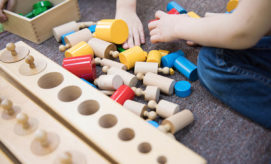
  • Montessori. The Montessori approach originates from the teachings of Maria Montessori in the early 1900s. An article written for PBS Kids describes the Montessori  philosophy as “child-centered, with teachers serving as guides…While there is a focus on academics, the distinguishing feature is that children learn at their own pace…with children ages three, four, and five all being in the same room.” If you are interested in learning more about the Montessori approach, click here.
  • Reggio Emilia. Reggio Emilia uses an emergent curriculum, building topics for study around the interests of the children by discussing topics of interest with  the class and with their families. Learning themes and topics are often drawn from areas that fascinate many children, such as puddles and dinosaurs.  Reggio Emilia programs are based on the view that young children are curious about the world,  and they have a natural ability to learn from their surroundings. Classroom set-up is therefore intentional, with the goal of creating a learning environment that serves as the child’s “third teacher”. Reflection through observation and documentation of children (displayed photos with descriptions) is another important element of the Reggio Emilia approach. For a more detailed article about the Reggio Emilia philosophy, click here.
  • Waldorf.  Waldorf is a play-based approach that is also referred to as Rudolf Steiner Education. According to Waldorf Inspired Learning, “The Waldorf curriculum emphasizes the whole child, by matching learning activities to  specific stages of child development, integrating the arts throughout the curriculum, and including every one of the seven multiple intelligences.” Waldorf schools and teachers are all required to be Waldorf certified. If you are interested in learning more, click here.
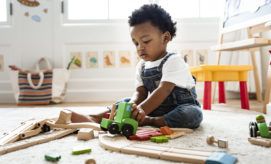
  • PITC (Program for Infant and Toddler Care). The mission of PITC programs is “to ensure that America’s infants get a safe, healthy, emotionally secure, and intellectually rich start in life.” The philosophy is centered around relationship-based care in which caregivers give responsive, attentive, and loving care. PITC’s website offers resources to infant & toddler care providers, including free, printable handouts on topics related to infant and toddler care and learning.
  • RIE (Resources for Infant Educators). RIE, also called “educaring,” is built upon the basic principles of Magda Gerber. The basis of the approach is respect for infants, and the goal is to support the development of an authentic child who is competent and secure. RIE/Educaring trusts in the competence and abilities of infants to initiate their own exploration. Educators and caregivers observe to understand the child’s needs and encourage children to be active participants in their own caregiving routines. If you are interested in learning more about educaring for infants, click here.
  • HighScope. As described by the online resource Parents,  “The HighScope Curriculum uses a carefully designed approach called active participatory learning. Children learn actively by having hands-on experiences with their surroundings, and learning is supported through consistent daily routines and well-organized classrooms. HighScope takes an academic slant with planned experiences in the basic subjects of math, reading, and science. It is based on past and current child development research.” For more information about HighScope’s infant/toddler and preschool curricula, click here.
  • Bank Street. Very Well Family, an online publisher providing advice on pregnancy, parenting, child health, and child development, describes the Bank Street method as “a child-centered education program focusing on a diverse curriculum. Students are offered active educational opportunities in areas that develop cognitive, emotional, physical, and social growth. Learning often includes more than one subject and takes place in groups, allowing children to learn at various levels and using different methods.” For more information about Bank Street’s approach to early learners, click here.
  • Parent Co-op. In parent co-op programs, parents get to be involved in the early childhood program’s daily routines, by working alongside teachers and spending time with their children in the school environment. According to Seattle-based Parent Map, there are a wide variety of different practices in co-op preschools, but most include a play-based curriculum and family involvement. To learn more, click here.
  • Creative Curriculum. This curriculum was developed by Teaching Strategies Inc. to provide teachers with materials that outline a child-centered approach to learning. Teaching Strategies describes its Creative Curriculum as a research-based, comprehensive early childhood program (birth-age 6) focused on project-based, play-driven investigations to foster development in social-emotional, physical, cognitive, and language skills. (The Creative Curriculum) balances child-initiated and teacher-directed learning to build confidence, creativity, and critical thinking. For more information about the Creative Curriculum approach, click here.
You might also be interested in…

Pin It on Pinterest

Share This
good2know
Privacy Overview

This website uses cookies so that we can provide you with the best user experience possible. Cookie information is stored in your browser and performs functions such as recognising you when you return to our website and helping our team to understand which sections of the website you find most interesting and useful.